


Navigating AI Together: A Week with the Center for Digital Thriving
by Elise Stephenson, Director of WIS Institute for Teachers (WISIT)
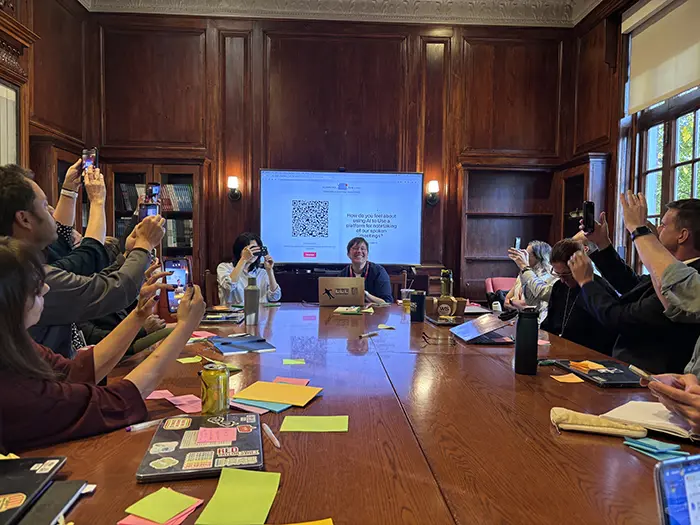
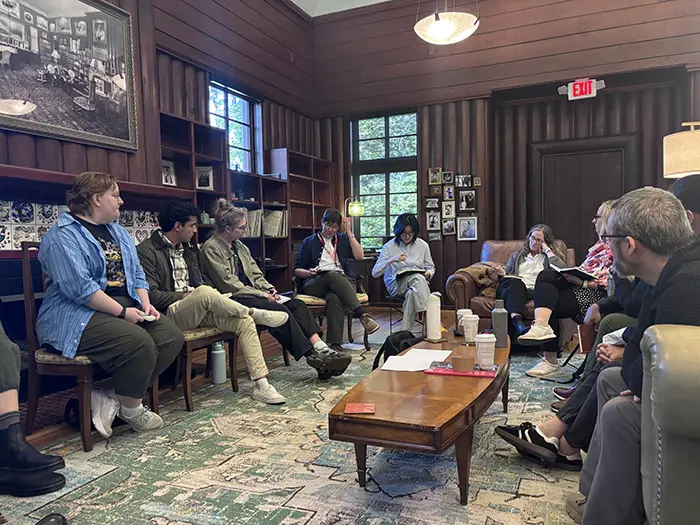
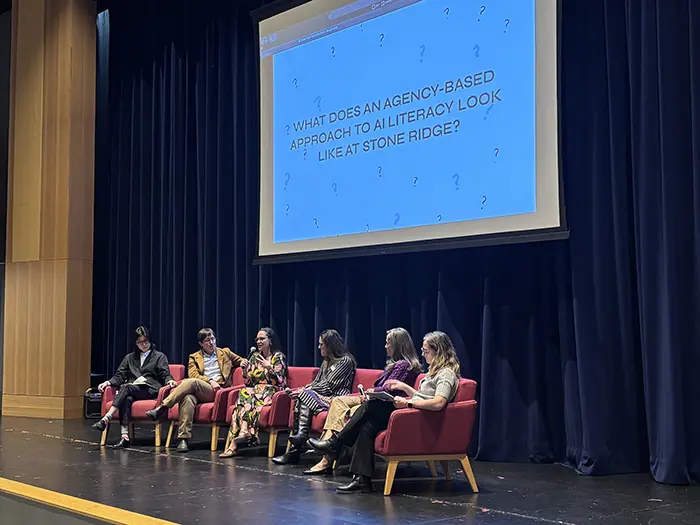
How do we prepare young people to thrive in a world increasingly shaped by artificial intelligence while staying grounded in the values that matter most? This was one of the big questions we explored last week as WISIT welcomed three researchers from Harvard's Center for Digital Thriving (CDT) for a week of conversations across the DC region. One of the things I love most about WISIT is our ability to bring together educators from public, charter, and independent schools to learn with and from one another. Throughout the week, we visited schools across the DMV, including DC International School, John Lewis High School, Stone Ridge School of the Sacred Heart, The Potomac School, and Washington International School, engaging students, educators, and families in conversations about AI, agency, and the future of learning.
The visit was particularly timely given CDT's recently published research, An AI Policy Isn't a Playbook. Drawing on a national survey of more than 1,000 public school teachers and principals, along with interviews with educators and young people, the researchers found that conversations about AI in schools are often dominated by concerns about cheating and detection. Their research challenges us to shift from being referees of AI use to coaches who help young people navigate complex decisions. Rather than relying solely on rules and policies, how might we create more opportunities for students to reflect on their values, exercise agency, and make thoughtful choices about technology?
At WIS, we had the opportunity to explore these questions from several perspectives. Members of our student Honor Council shared how they've been researching AI use among students and encouraging their peers to think critically about ethical and responsible use. Our teachers and school leaders reflected on the ways AI is changing teaching and learning, and members of the Teaching and Learning Committee explored several tools from CDT's Imagine AI Portfolio, designed to help school communities navigate the complexities of AI together. A group of parents also joined the researchers for a thoughtful, two-way conversation about their children's futures and educational journeys. They wrestled with big questions about how AI might shape the way their children learn, where it has the potential to enhance learning, and where it might actually detract from the important work of thinking, struggling, creating, and making meaning. How can we prepare our children for a future we can't fully predict while remaining rooted in WIS's humanistic values? I was particularly struck by how these conversations, despite coming from different perspectives, kept returning to the same fundamental questions about what we value and what we want for our young people.
If there's one thing I took away from the week, it's that we don't need to have all the answers to begin these conversations. In fact, creating space for dialogue, listening to young people, and reflecting together on the tensions we're navigating may be some of the most important work we can do right now. I'm grateful to our colleagues at the Center for Digital Thriving and to the many schools, educators, students, and families who joined us throughout the week. It's precisely this kind of learning across school communities that makes WISIT's work so meaningful, and I look forward to continuing the conversation.
 |
 |
 |

